Cut risky driving behaviours by 83%




.avif)
.avif)
.avif)
.png)
Most fleet risk comes down to a handful of behaviours repeated every day. Here is the scale of each.
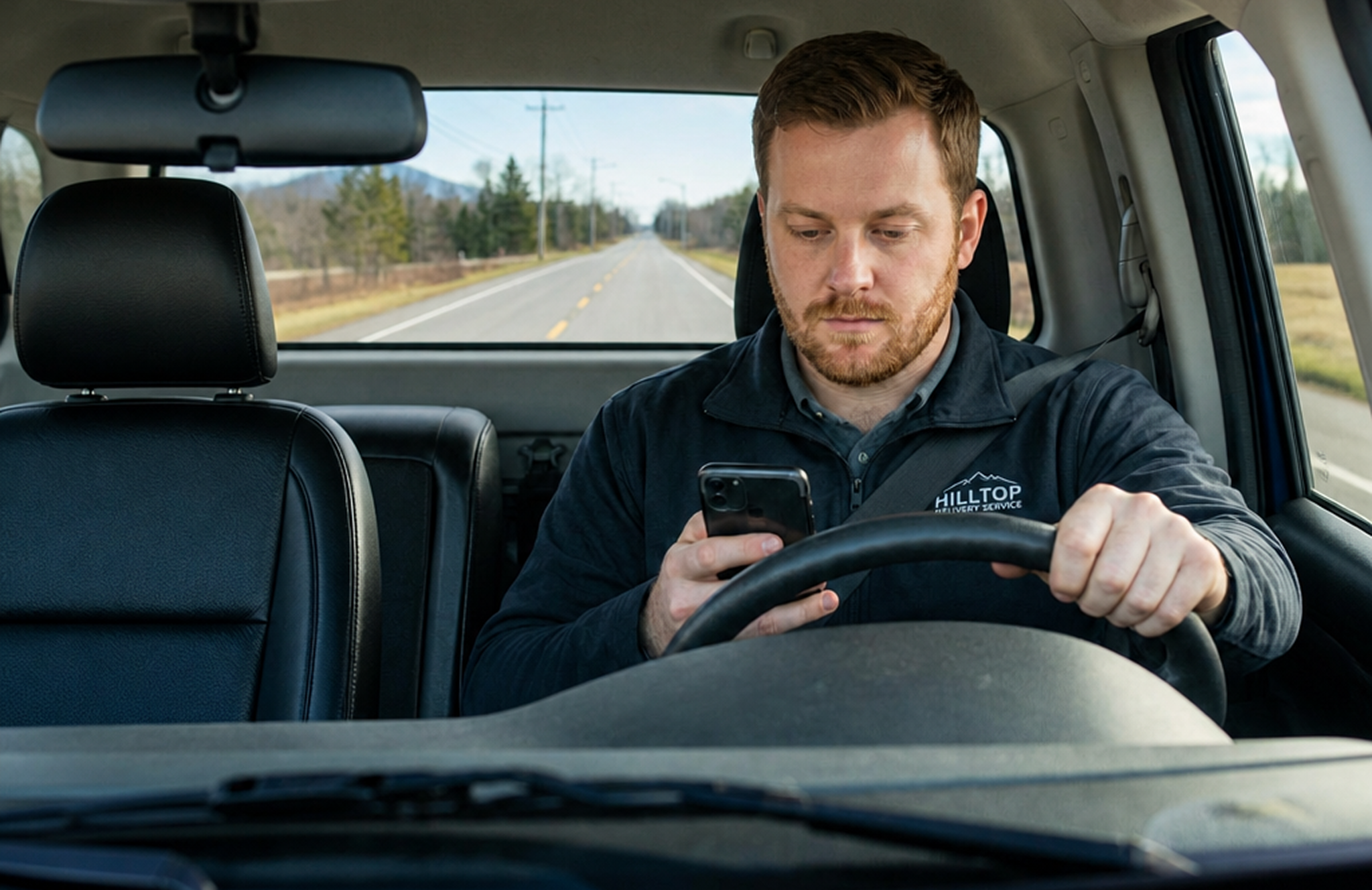
More than a quarter of drivers (27%) admit to handheld calls while driving, rising to 55% of drivers under 25.
RAC, 2024
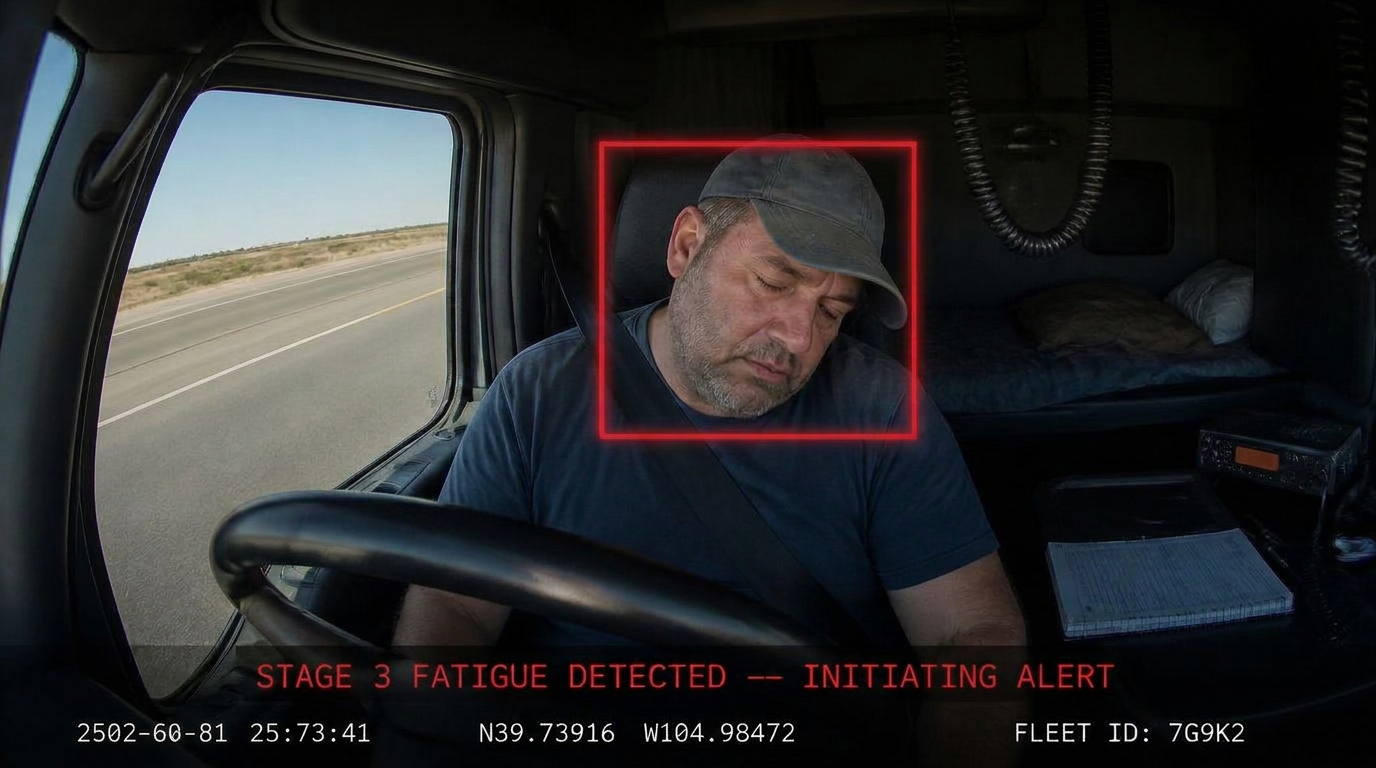
RoSPA estimates fatigue is a factor in up to 20% of road collisions.
RoSPA, 2024
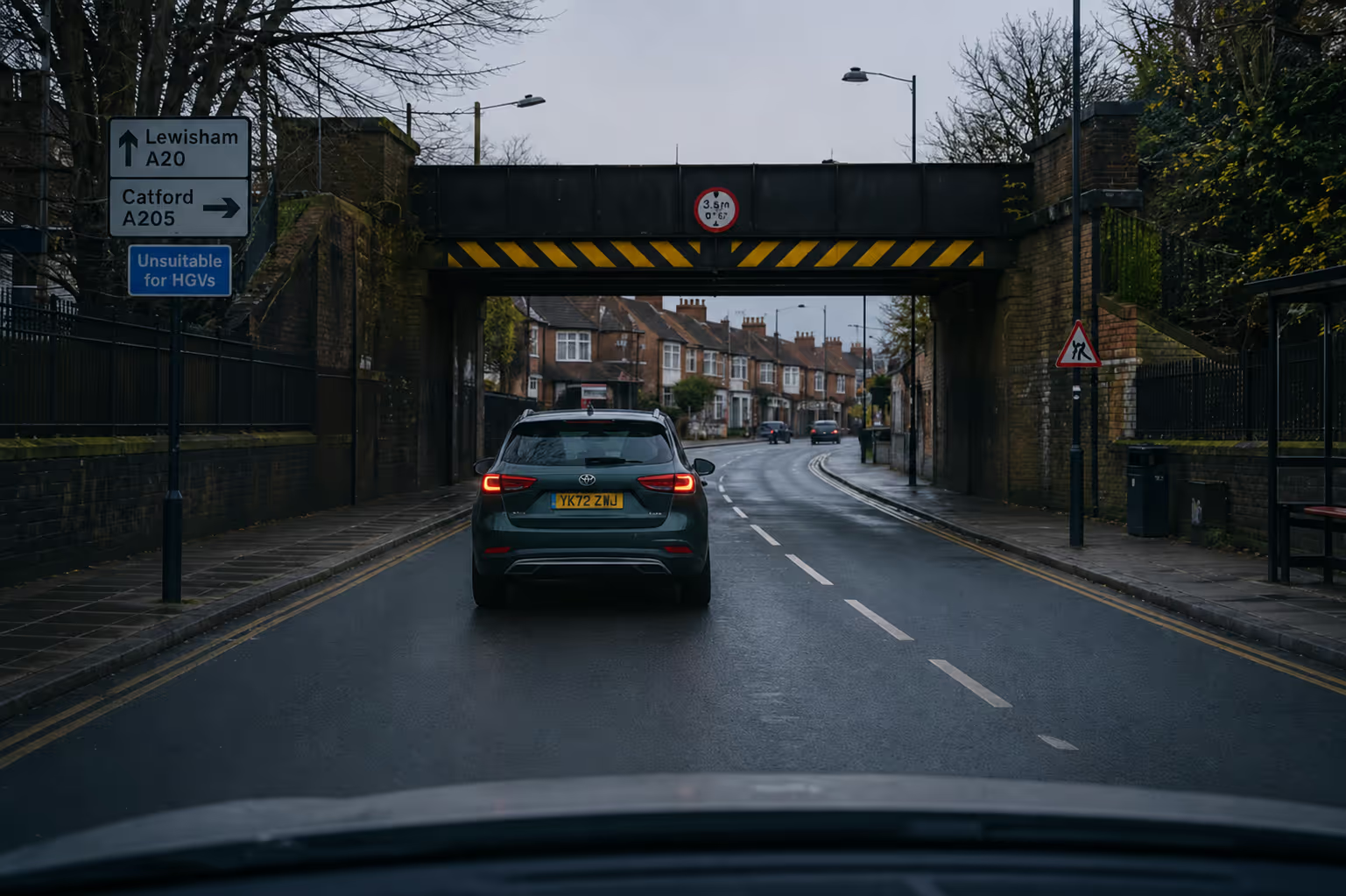
Tailgating is a factor in around 1 in 8 collisions on England’s motorways and major A-roads.
National Highways, 2025
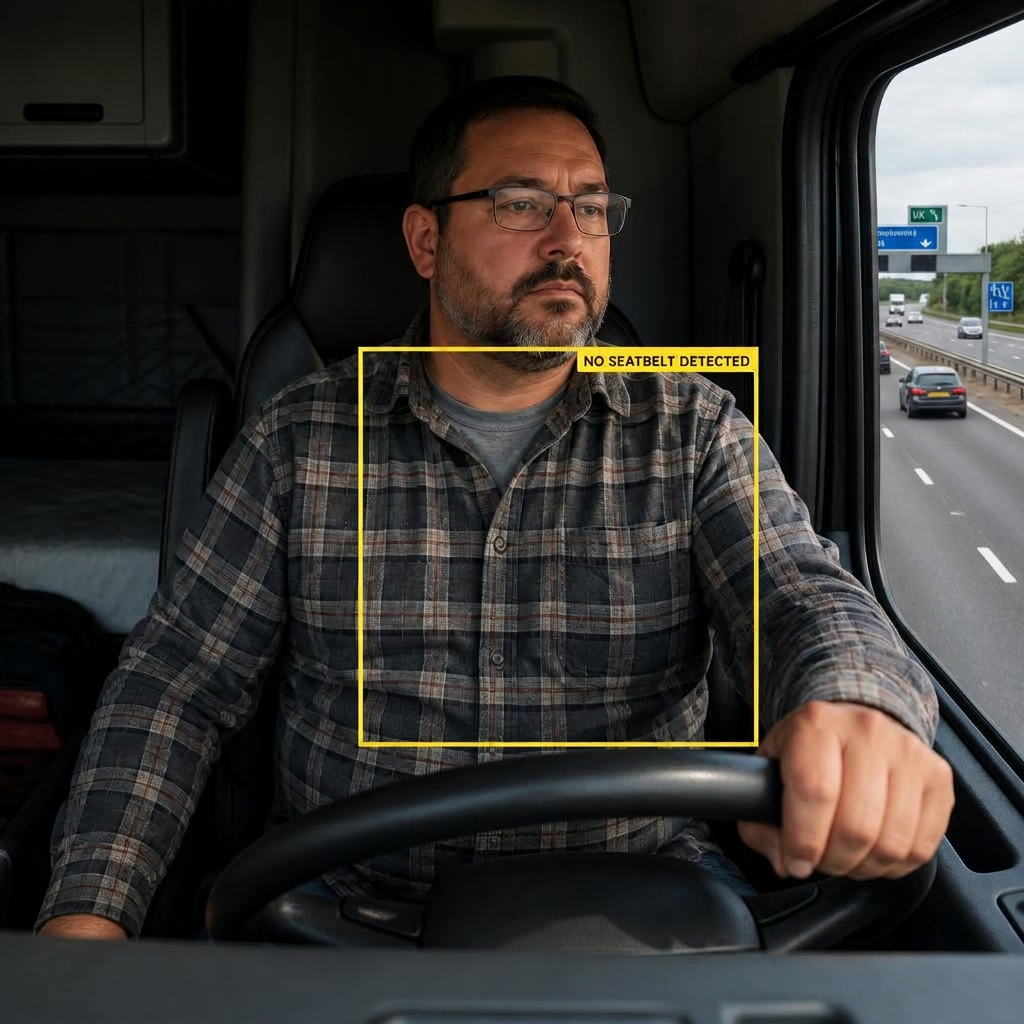
Roughly 2.4% of drivers are observed not wearing a seatbelt, a small share of drivers carrying a large share of the risk.
DfT, England 2023
See more, risk less
Stop distraction before it starts
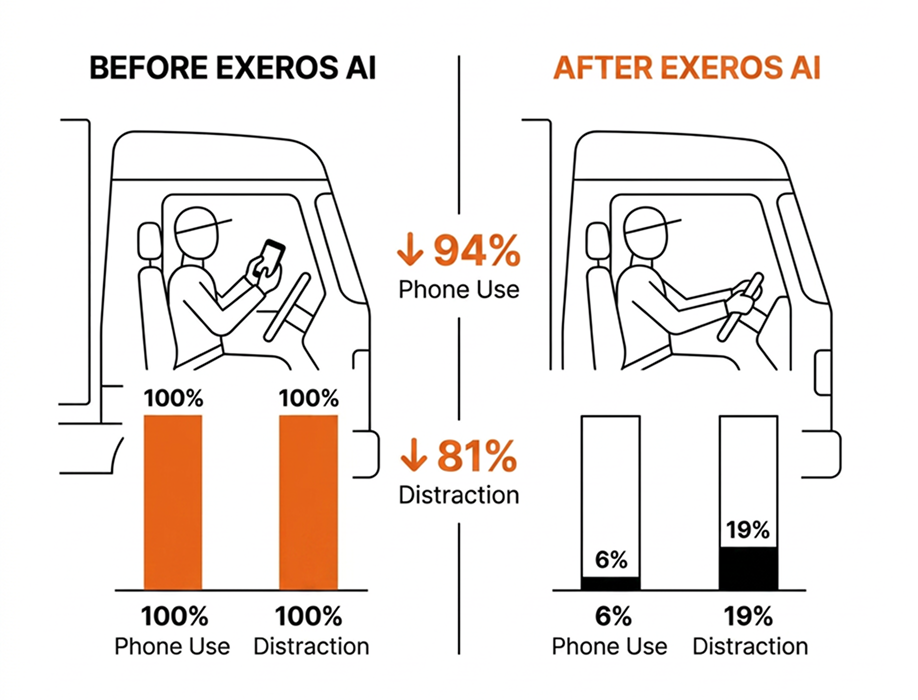
Exeros AI cameras detect handheld phone use and distraction in the cab as it happens, and Roadie prompts the driver to correct themselves before it becomes an incident.
Across Exeros-deployed UK fleets, phone use has fallen 94% and distraction 81%.
Prevent fatigue behind the wheel
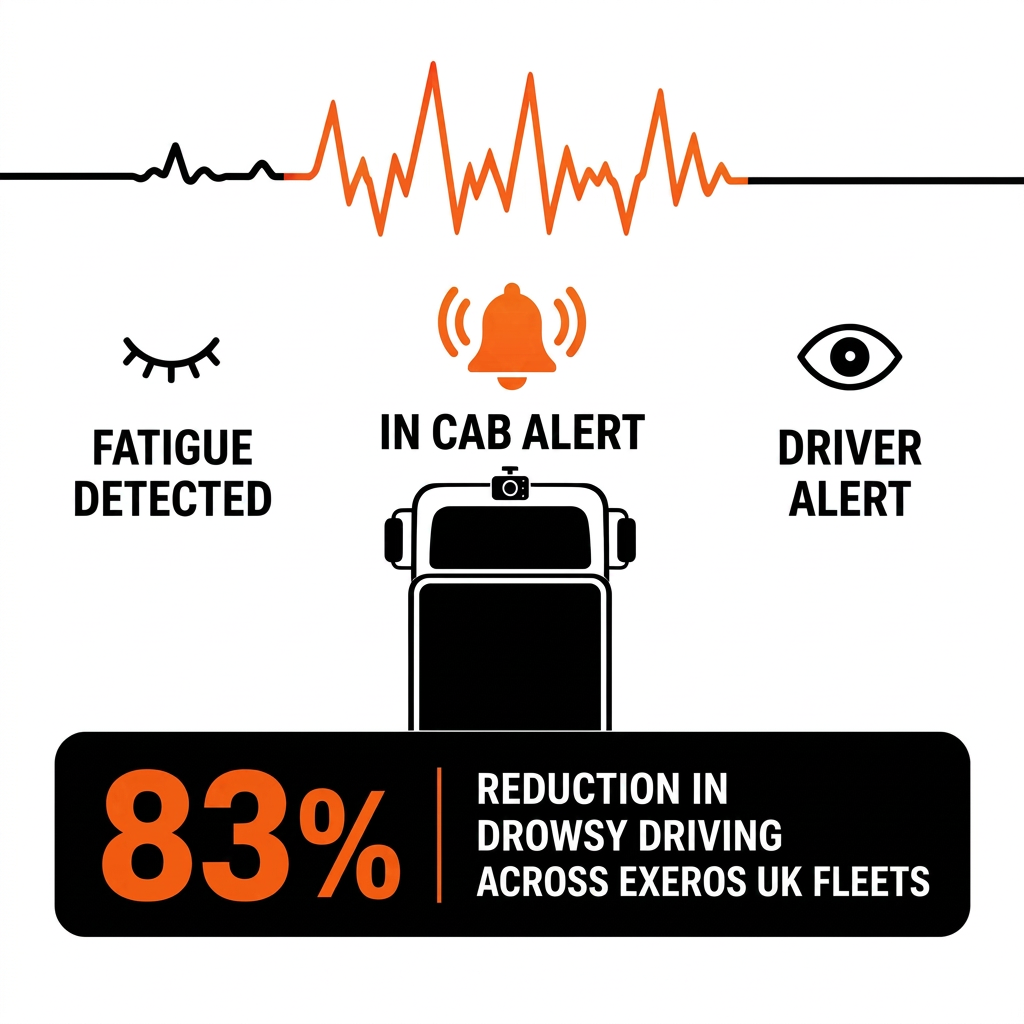
Exeros AI fatigue detection reads the signs of drowsiness and micro-sleeps, and alerts the driver in the cab. Roadie supports the driver with coaching, so they can act before fatigue turns into a collision.
Across Exeros-deployed UK fleets, drowsy driving has fallen 83%.
Keep a safe distance
Exeros forward-facing cameras measure the gap to the vehicle ahead and warn the driver when it closes. Roadie helps drivers hold a safe distance, which also smooths driving and lowers fuel use.
Across Exeros-deployed UK fleets, tailgating has fallen 78%.
.png)
Make seatbelt use a habit
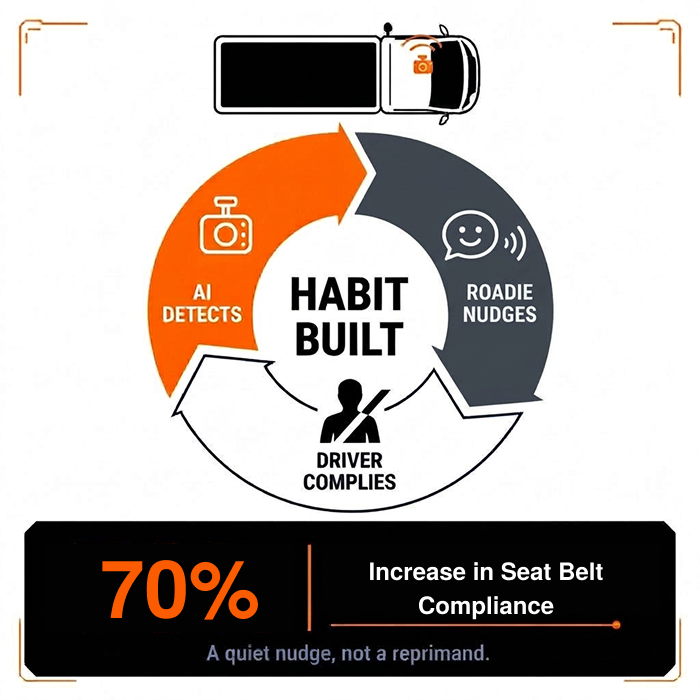
Exeros AI cameras detect when a driver sets off unbelted and prompt them through Roadie. It is a quiet nudge, not a reprimand, and it builds a habit that sticks.
Across Exeros-deployed UK fleets, seatbelt compliance is up 70%.
The numbers that matter
Learn more about partnering with Exeros
FAQ
Questions about the platform, privacy, and how it works for your fleet
Risky driving behaviour is any action behind the wheel that raises the chance of a collision. In fleets, the main ones are phone use and distraction, fatigue and drowsiness, tailgating, speeding, and not wearing a seatbelt. Exeros AI cameras detect these behaviours in the cab, so drivers can correct them before they cause an incident.
Fleet operators reduce risky driving behaviour by catching it in the cab and coaching the driver to self-correct, rather than reviewing footage after the event. Exeros AI cameras detect risky behaviours as they happen, and the Roadie Co-Pilot app prompts the driver on the spot. Across Exeros-deployed UK fleets, this delivers an 83% reduction in risky driving behaviours.
Yes. AI cameras reduce risky driving by detecting behaviours like phone use, fatigue, and tailgating in real time and prompting the driver to correct them. Across Exeros-deployed UK fleets, AI cameras and in-cab coaching deliver an 83% reduction in risky driving behaviours, with phone use down 94% and tailgating down 78%.
Fatigue, distraction, and tailgating are among the biggest contributors to fleet collisions. RoSPA estimates fatigue is a factor in up to 20% of road collisions (RoSPA, 2024), and tailgating is a factor in around 1 in 8 collisions on England's motorways and major A-roads (National Highways, 2025). More than a quarter of drivers admit to handheld phone calls while driving (RAC, 2024).
Yes. Fewer risky behaviours mean fewer at-fault incidents, which lowers claims and, over time, premiums. One Exeros fleet, Stephen Sanderson Transport, cut its insurance premiums by 25% after deployment. Footage from the cameras also clears drivers when a claim against them is false, cutting payouts on non-fault claims.